NOTE: click on the links in blue below to access the relevant information.
It can be argued that top of the list of health challenges facing modern day pets, is their constant exposure to an ever increasing number of potentially harmful substances, both inside and outside the home.
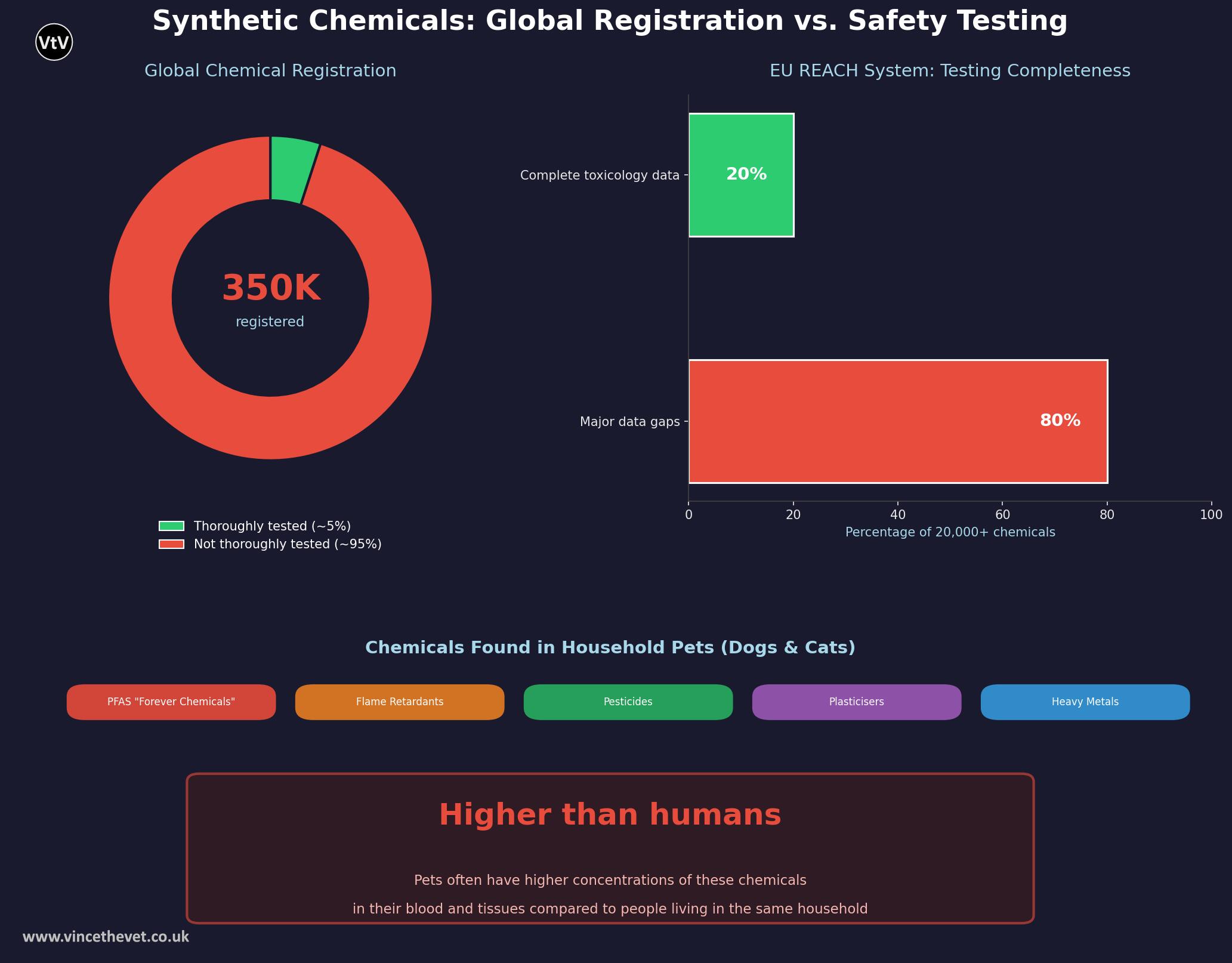
As concerning as the scale of environmental contamination with these chemicals is, even more shocking is that only a fraction of these substances have undergone a thorough toxicological assessment to determine what they might do to humans and animals before being unleashed on the world.
THE HIDDEN HEALTH IMPACT
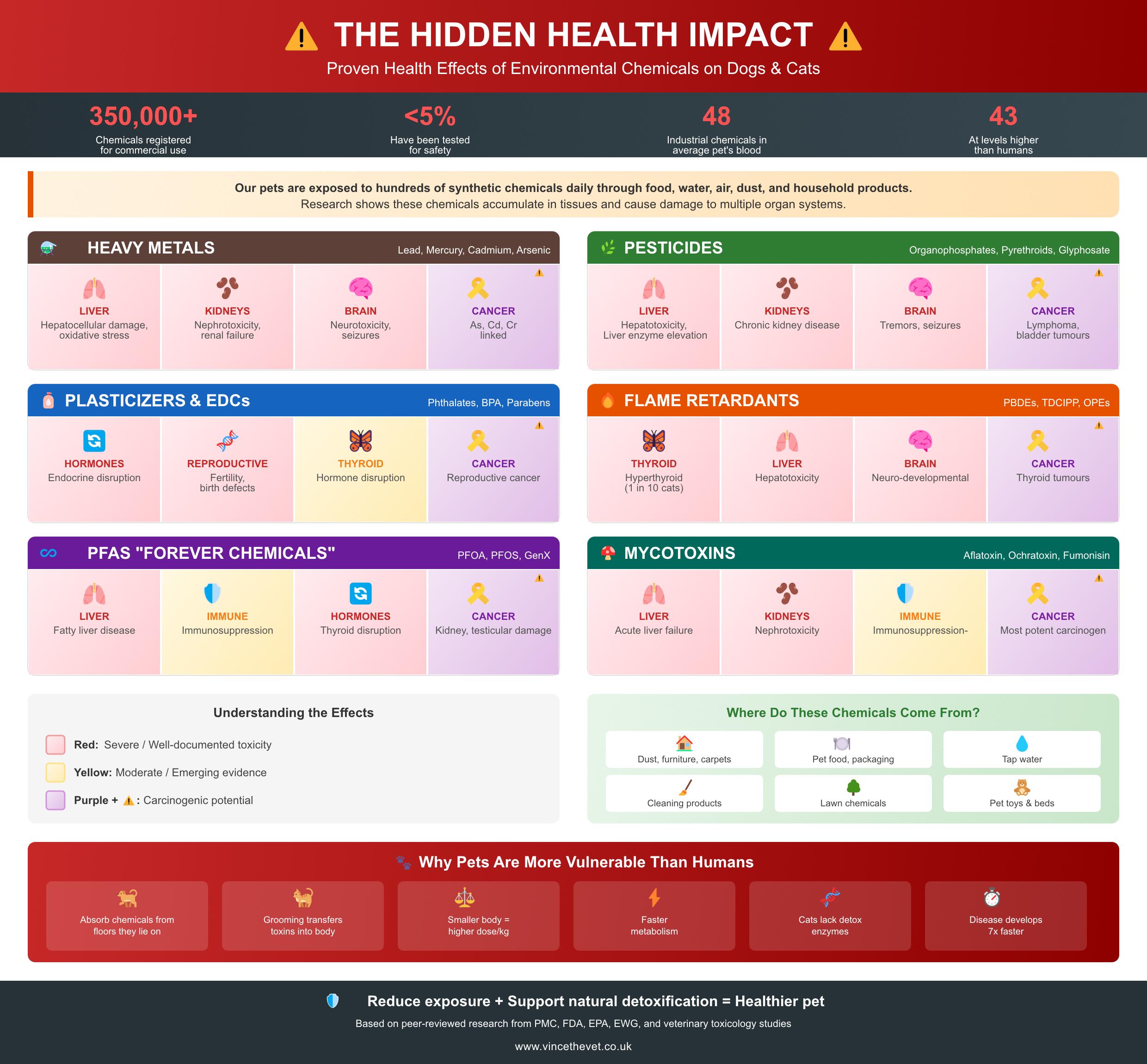
Despite this information gap, what we do know for certain however, is that certain groups of these chemicals are proven to damage multiple organ systems:
CHEMICAL EXPOSURE GUIDE
Research shows that dogs and cats carry dozens of industrial chemicals in their blood and tissues — often at higher levels than humans living in the same homes.
These include PFAS 'forever chemicals', flame retardants, pesticides, plasticisers, and heavy metals.
While some chemical exposures are unavoidable, given the world we now live in, contact with many can be reduced or eliminated by making simple changes to the home and daily routine, as outlined below:
PART 1: EXPOSURES THAT ARE DIFFICULT TO AVOID |
Outdoor Environment
- Vehicle exhaust & petrochemicals — Carbon monoxide, benzene, and particulate matter from cars, lorries, and buses on roads and in car parks
- Public space pesticides & herbicides — Parks, pavements, verges, and communal gardens are often treated with weedkillers and insecticides
- Agricultural chemicals — Pesticide drift and residue from nearby farms, especially in rural areas
- Industrial air pollution — Emissions from factories, power plants, and construction sites
- Contaminated soil & water — Heavy metals and legacy pollutants in urban soil, puddles, and streams
Home Infrastructure
- Tap water contaminants — Chlorine, fluoride, trace pharmaceuticals, and in older properties, lead from pipes
- Building materials — Formaldehyde in plywood, MDF, and insulation; VOCs in paints and adhesives; asbestos in older buildings
- Existing carpets & flooring — Flame retardants, stain-resistant coatings (PFAS), and plasticisers embedded in existing floor coverings
- Older furniture & upholstery — Pre-2015 furniture often contains brominated flame retardants that off-gas over time
- Household dust — A reservoir of flame retardants, phthalates, and heavy metals from various sources throughout the home
Standard Pet Products
- Conventional pet bowls — Plastic bowls may leach BPA and phthalates; coloured ceramics may contain lead glazes
- Pet bedding & toys — Often treated with flame retardants and stain-resistant chemicals; plastic and rubber toys may contain phthalates
- Flea & tick treatments — Contain pesticides that remain on fur and skin
- Commercial pet food — May contain trace pesticide residues, heavy metals from fish-based ingredients and packaging
PART 2: EXPOSURES YOU CAN REDUCE OR ELIMINATE |
These are choices within your control.
Making changes here can significantly reduce your pet's chemical burden.
Products to Remove or Replace:
- Scented candles & wax melts — Release benzene, toluene, and synthetic fragrances; paraffin wax produces soot containing carcinogens
- Plug-in air fresheners & aerosol sprays — Contain phthalates, formaldehyde, and synthetic musks that accumulate in pet tissues
- Reed diffusers & aromatherapy oils — Contain VOCs and synthetic chemicals that pets inhale and absorb; some essential oils are toxic to pets
- Fabric softeners & dryer sheets — Leave chemical residue on pet bedding and blankets; contain quaternary ammonium compounds
- Conventional cleaning products — Bleach, ammonia, disinfectants, and antibacterial agents leave residues on floors and surfaces where pets walk and lie
- Non-stick cookware (Teflon) — When overheated, releases PFAS fumes; particularly dangerous for birds but harmful to all pets
- Mothballs & pest repellents — Contain naphthalene or paradichlorobenzene, both toxic to pets if inhaled or ingested
- Plastic food storage containers — Especially when heated, leach BPA and phthalates; replace with glass or stainless steel
Activities to Do Elsewhere or Avoid:
- Smoking & vaping indoors — (inhaled and ingested fumes, residues on fur swallowed during self-grooming); vape aerosols contain propylene glycol and heavy metals; keep rooms used for smoking or vaping off-limits to pets
- Applying perfume, hairspray & aerosol deodorants — Use in a separate room with the door closed; aerosol particles settle on pet fur and are inhaled
- Painting & varnishing — Keep pets away during application and for 48 - 72 hours after; VOCs off-gas at floor level where pets breathe; consider boarding pets during major works
- Using nail polish & remover — Contains toluene, formaldehyde, and acetone; apply in well-ventilated areas away from pets
- Treating garden with herbicides /pesticides — Use pet-safe alternatives or keep pets off treated areas for recommended waiting period
Safer Alternatives to Choose:
- Stainless steel or ceramic pet bowls — Choose unglazed or lead-free certified ceramics; avoid plastic entirely
- Natural fibre pet beds — Organic cotton or hemp without flame retardant treatments
- Plant-based cleaning products — Vinegar diluted with equal parts water, bicarbonate of soda and castile soap; avoid 'antibacterial' claims; for washing pet bedding, blankets, and anything your pet contacts regularly
- Cotton rope toys — Avoid vinyl / PVC toys; look for non-toxic certifications
- HEPA air purifiers — Help remove airborne particles and VOCs; especially useful in urban homes
- Filtered water — Reverse osmosis filter is best, but even a jug filter will remove chlorine and many contaminants from drinking water
5 QUICK WINS FOR REDUCING YOUR PET'S EXPOSURE |
- Dust and vacuum frequently — Use a vacuum with a HEPA filter; dust settles at pet level and is ingested during grooming.
- Ventilate daily (before dawn and after sunset when pollen counts are high) — Open windows for at least 10 - 15 minutes each day to reduce indoor VOC concentrations.
- Wash pet bedding weekly — Use white vinegar and hot water to remove accumulated dust and chemical residues; add a little castile soap if necessary
- Wash limbs and paws after walks — Use clean, fresh water to remove pesticides, road salt, and other contaminants before they're tracked through your home or are ingested by your pets during self-grooming.
- Remove shoes at the door — Prevents tracking outdoor chemicals, lead dust, and pesticides onto floors where pets rest.
THE ROLE OF DETOXIFICATION
While detoxification supplements cannot fully compensate for high ongoing chemical exposure — which remains the priority - a range of carefully selected, evidence-based natural products can help lighten the chemical burden on the body, and lower the risk of ill-effects occurring.
Examples include the following.
1.Chlorella — Heavy Metal Binding (In Vitality)
Evidence Strength: Moderate to Strong
Chlorella vulgaris has demonstrated ability to bind heavy metals including cadmium, lead, and mercury through its cell wall containing sporopollenin. Animal studies show enhanced faecal excretion of cadmium and prevention of cadmium absorption.
- Effect of Chlorella vulgaris intake on cadmium detoxification in rats.
- Effect of Chlorella intake on Cadmium metabolism in rats.
- Cellular and physiological approaches to evaluate the chelating effect of Chlorella.
- Algae extract supplementation modulates heavy metal levels in dental patients
2. Spirulina — Arsenic and Antioxidant (In Vitality)
Evidence Strength: Moderate
A landmark RCT in Bangladesh showed spirulina plus zinc significantly reduced arsenic levels and improved clinical symptoms in chronically exposed individuals. Contains phycocyanin with strong antioxidant properties.
- Efficacy of spirulina extract plus zinc in chronic arsenic poisoning.
- Spirulina in Clinical Practice: Evidence-Based Human Applications.
- The Role Spirulina in Mitigation of Heavy-Metal Toxicity: Review.
- Spirulina protective effects against heavy metal toxicity in neuroblastoma cells.
3. Milk Thistle — Liver Protection (In Detoxification Support)
Evidence Strength: Strong
Silymarin complex has well-documented hepatoprotective effects through antioxidant activity, membrane stabilisation, and enhanced glutathione synthesis. Multiple systematic reviews support efficacy in liver disease.
Key Scientific References:
- Silymarin as Supportive Treatment in Liver Diseases: Narrative Review
- Impact of Silymarin Supplements on Liver Enzyme Levels: Systematic Review.
- Milk thistle for treatment of liver disease: systematic review and meta-analysis.
- Milk Thistle: Effects on Liver Disease — AHRQ Evidence Report.
4. Chitosan — Microplastics and Metals
Evidence Strength: Moderate / Emerging
Chitosan (from crustacean shells) has positively charged amino groups that bind negatively charged substances. Recent studies show it can aggregate and bind microplastics, promoting their excretion. Currently has the strongest direct evidence for microplastic binding.
- Ingesting chitosan can promote excretion of microplastics (2025).
- Chitosan enhances microplastic excretion in human stools.
- Al / Fe ionotropic chitosan hydrogels for PET microplastic removal.
5. Pectin / Modified Citrus Pectin — Heavy Metal Binding
Evidence Strength: Moderate
Modified citrus pectin (MCP) has smaller molecules that can be absorbed and bind heavy metals systemically. Clinical studies in children showed reduced blood lead levels, and pilot studies showed increased urinary excretion of arsenic, cadmium, and lead.
- Modified citrus pectin as effective chelator of lead in children.
- MCP / alginates in heavy metal chelation: five case reports
6. Zeolite (Clinoptilolite) — Mycotoxins and Metals
Evidence Strength: Strong for mycotoxins; Moderate for metals
Clinoptilolite zeolite is well-established in agricultural use for mycotoxin binding, particularly aflatoxins. Has selective affinity for heavy metals via ion exchange. Extensive evidence in livestock for reducing aflatoxin absorption.
- Clinoptilolite reduces milk aflatoxin M1 in dairy cattle.
- Modified clinoptilolite zeolite detoxifies aflatoxin B1 in broilers.
- Zeolite and Lactobacillus reduce aflatoxin B1 in poultry feed.
7. Activated Charcoal — Acute Poisoning
Evidence Strength: Strong for acute use; Limited for chronic detox
Standard of care for acute poisoning within 1 - 2 hours of ingestion. Highly porous surface adsorbs organic compounds. Not effective for most metal ions and may bind nutrients with chronic use.
- The Use of Activated Charcoal to Treat Intoxications.
- Activated charcoal for acute overdose: a reappraisal
8. Bentonite Clay — Mycotoxins
Evidence Strength: Strong for mycotoxins; Moderate for heavy metals
Montmorillonite clay with high cation exchange capacity. Well-documented ability to bind aflatoxins in animal feed. Reduces bioavailability of aflatoxin and has been used in human studies in Ghana to reduce aflatoxin biomarkers.
- High capacity bentonite clay for aflatoxin sorption.
- Bentonite Clay as a Natural Remedy: A Brief Review.
- Aflatoxin toxicity reduction by surface-modified clay additives.
9. N-Acetyl Cysteine (NAC) — Glutathione Support
Evidence Strength: Strong for glutathione support; Moderate for heavy metals
Precursor to glutathione (master antioxidant). Standard treatment for paracetamol overdose. Animal studies show protection against mercury and lead toxicity. Reliably increases glutathione levels in human studies.
- N-Acetylcysteine as a Chelator for Metal Toxicity: Review.
- N-Acetylcysteine: A Review of Clinical Usefulness.
10. Cilantro — Chelation Claims
Evidence Strength: Weak to Moderate
Popular in alternative medicine but limited rigorous human evidence. Some rodent studies suggest enhanced lead excretion. Claims often exceed evidence. May be more effective combined with chlorella as a binder.
PRACTICAL CONSIDERATIONS
Detoxification supplements can usefully be divided into 2 groups:
(a) Those that support the organs of detoxification
(b) Gut-Acting Binder
1. Organ Support Supplements:
Assist the body's excretory organs and pathways (liver, kidneys, digestive tract and skin): particularly the liver and antioxidant systems.
Supplement | Primary Action | Detox Mechanism | Evidence |
Milk Thistle | Liver protection & regeneration | Silymarin stabilises hepatocyte membranes, enhances glutathione synthesis, promotes liver cell regeneration | Strong |
N-Acetyl Cysteine (NAC) | Glutathione precursor | Replenishes glutathione (master antioxidant), directly chelates some heavy metals, supports Phase II liver detoxification | Strong |
Spirulina | Antioxidant & arsenic reduction | Phycocyanin provides potent antioxidant protection, reduces arsenic levels (when combined with zinc), supports immune function | Moderate |
Cilantro | Chelation support | May mobilise heavy metals from tissues; most effective when combined with a binder (e.g., chlorella) to prevent reabsorption | Weak to Moderate |
2. Gut-Acting Binders:
Binder | Primary Targets | Binding Mechanism | Evidence |
Chlorella | Heavy metals (Cd, Pb, Hg) | Sporopollenin cell wall binds metals; enhances faecal excretion and prevents intestinal absorption | Moderate to Strong |
Chitosan | Microplastics, heavy metals | Positively charged amino groups bind negatively charged plastics and metals; aggregates microplastics for faecal elimination | Moderate/Emerging |
Modified Citrus Pectin | Heavy metals (Pb, As, Cd) | Smaller modified molecules can be absorbed and chelate metals systemically; increases urinary heavy metal excretion | Moderate |
Zeolite (Clinoptilolite) | Mycotoxins, heavy metals | Microporous aluminosilicate structure traps mycotoxins; ion exchange mechanism binds heavy metal cations | Strong (mycotoxins) |
Activated Charcoal | Organic toxins, drugs | Highly porous surface adsorbs organic compounds via van der Waals forces; best within 1-2 hours of ingestion | Strong (acute) |
Bentonite Clay | Mycotoxins (aflatoxins) | High cation exchange capacity; montmorillonite layers intercalate and bind aflatoxins, reducing bioavailability | Strong (mycotoxins) |
3. Vince the Vet Detoxification Products:
Provide targeted, natural support to the body's excretory organs and detoxification mechanisms:
Product | Category | Key Ingredients | Detox Effects |
Vitality | Organ and Gut Support | Spirulina, Chlorella, antioxidants | Comprehensive antioxidant support; algae provide heavy metal binding; supports overall cellular health and detox pathways |
Heart plus Liver Support | Organ Support | Milk Thistle (Silymarin), hepatoprotective herbs | Enhances Phase I and II liver detoxification; protects hepatocytes from toxin damage; promotes glutathione synthesis and liver regeneration |
Immunity | Organ Support | Immune-supporting herbs, antioxidants, vitamins | Supports immune system's role in identifying and eliminating damaged cells; reduces oxidative stress from toxin exposure |
Digestion | Gut Support | Digestive enzymes, prebiotic fibres, gut-soothing herbs | Optimises gut transit time for toxin elimination; supports beneficial bacteria that help metabolise toxins; maintains gut barrier integrity; Beta-glucans bind mycotoxins; B vitamins support methylation; glutathione precursors |
Natural Worm Control and Detoxification Support | Organ support | Natural cleansing herbs | Promotes healthy bowel movements to eliminate bound toxins; supports gut cleansing; helps remove accumulated waste and toxins |
(Continued in 'The poisoning of our pets - Part 2' - click here.)