

Chronic lymphoplasmacytic dermatitis is a persistent, immune-mediated inflammatory skin disease characterised by infiltration of white blood cells (lymphocytes and plasma cells) into the skin (dermis and epidermis).
Underlying causes:
These may include:
1. Allergic reactions to environmental allergens, ectoparasites, a range of different microbes and hypersensitivities to one or more foods
2. Auto-immune disorders
3. Chronic infections such as bacterial or yeast overgrowths
4. Contact hypersensitivity, such as a reaction to environmental irritants
Appearance:
Recurrent or persistent inflammation typically results in:
- pruritis (itching)
- hair loss (alopecia)
- secondary infections (involving bacteria or Malassezia, for example)
- thickening of the skin (lichenification) resulting in a leathery / bark like appearance
- pigmentation of the affected areas
These changes are often seen on the chest / abdomen, lower limbs, face, and ears to begin with, but can extend to other parts of the body.
Itching and inflammation can be seasonal or all year round depending on the triggers.
Diagnosis
Requires:
1. History taking and a thorough physical examination by a vet.
2. Investigations to first rule out common conditions such as FAD (Flea Allergy Dermatitis (strict flea control trial), ectoparasites (skin scrapings, hair plucks), infections (cytology).
If these are clear, a skin biopsy is often necessary to confirm the histological reaction present, followed by an elimination diet to rule out food reactions.
Medical Treatment
1. Identify & remove triggers where possible (avoid contact allergens / irritants, control ectoparasites year-round and manage environmental allergens if present.
2. Control Inflammation & infection - through the use of appropriate medication with the least side-effects.
3. Topical therapy to moisturise the skin, aid infection control, reduce inflammation and help restore the skin barrier.
Nutritional Support
1. Omega 3 fatty acids to support the body's natural anti-inflammatory pathways .
We advise Time Health's Algal oil capsules (enter the code vincethevet15 at the checkout on Time Health's website to receive a 15% discount - applies to all their products) for the reasons explained here.
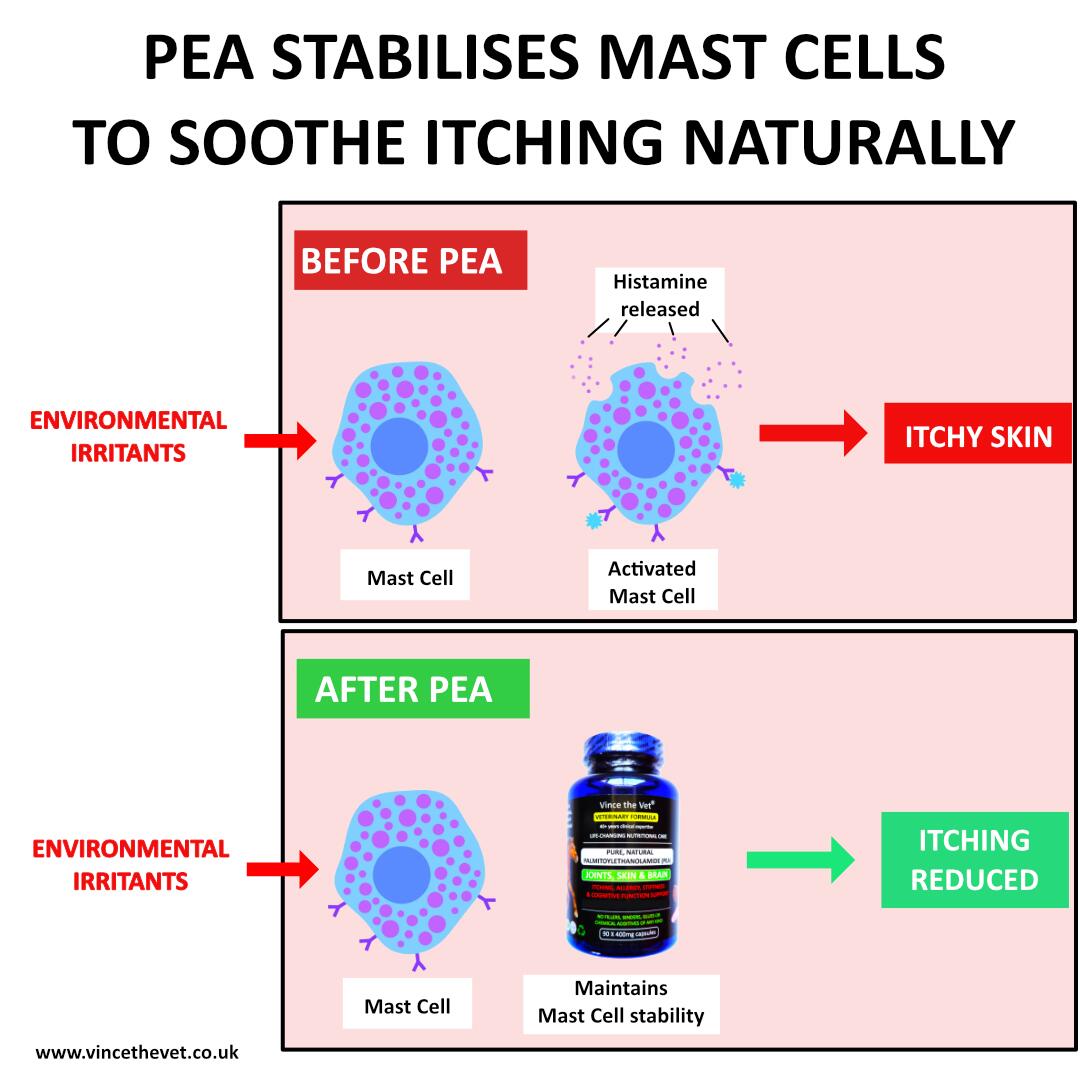
2. PEA helps to stabilise mast cells which are involved in itching and allergic reactions, soothing the skin in the process.
3. Vitality provides a rich supply of antioxidants which help to reduce inflammation, and also a wide range of micronutrients important for skin regeneration and repair.
4. Digestion supports gut health which in turn can help balance the immune system
NOTE
If the above supplements aren't sufficient to achieve the desired outcome after 12 weeks or more, also add Immunity to the regime to aid the development of a more balanced and less reactive immune system over time (3 - 6 months or more).
Lifelong management may be necessary if the allergenic trigger(s) cannot be identified or eliminated.
Combining medical, nutritional and topical therapy improves control and reduces reliance on systemic drugs.
It is essential to remove all pro-inflammatory sugar and carbohydrate rich foods (click here for a list of the most common culprits) from the diet as possible, for nutritional support to be as effective as possible.
If after following this action plan, the desired outcome has not been achieved, either book an online consultation here or get in touch.