
Vestibular Disease is a condition affecting the middle ear and / or brainstem, which most commonly affects older dog.
Key signs typically include one or more of the following:
1. Head Tilt – Often severe and directed to one side.
2. Loss of Balance / Ataxia – Staggering, falling, or rolling to one side.
3. Nystagmus – Rapid, abnormal eye movements (horizontal, vertical, or rotary).
4. Circling – Tendency to walk in circles.
5. Nausea and Vomiting – Caused by motion sickness-like sensations.
6. Disorientation / Confusion – Appearing dizzy or unsettled.
7. Reluctance to Stand or Walk – Often lying still due to imbalance.
8. Drooling or Inappetence – Due to nausea.
9. Possible Facial Nerve Paralysis – Drooping lip, ear, or eyelid (if associated with middle/inner ear infection).
Underlying causes, such as ear infections, hypothyroidism, toxins or drug reactions, inflammatory or infectious diseases and strokes or brain disease may be involved, and when this is the case it is important that targeted veterinary treatment is provided.
Often however, no specific cause is identified and this is termed idiopathic vestibular disease.
In these circumstances, drugs to ease nausea and prevent vomiting are prescribed, along with fluid therapy if dehydration is an issue. Assisted feeding and nursing care is also important if there is a reluctance to eat.
The good news is, that most dogs usually improve significantly within 72 hours and recover in 1–3 weeks with supportive care.
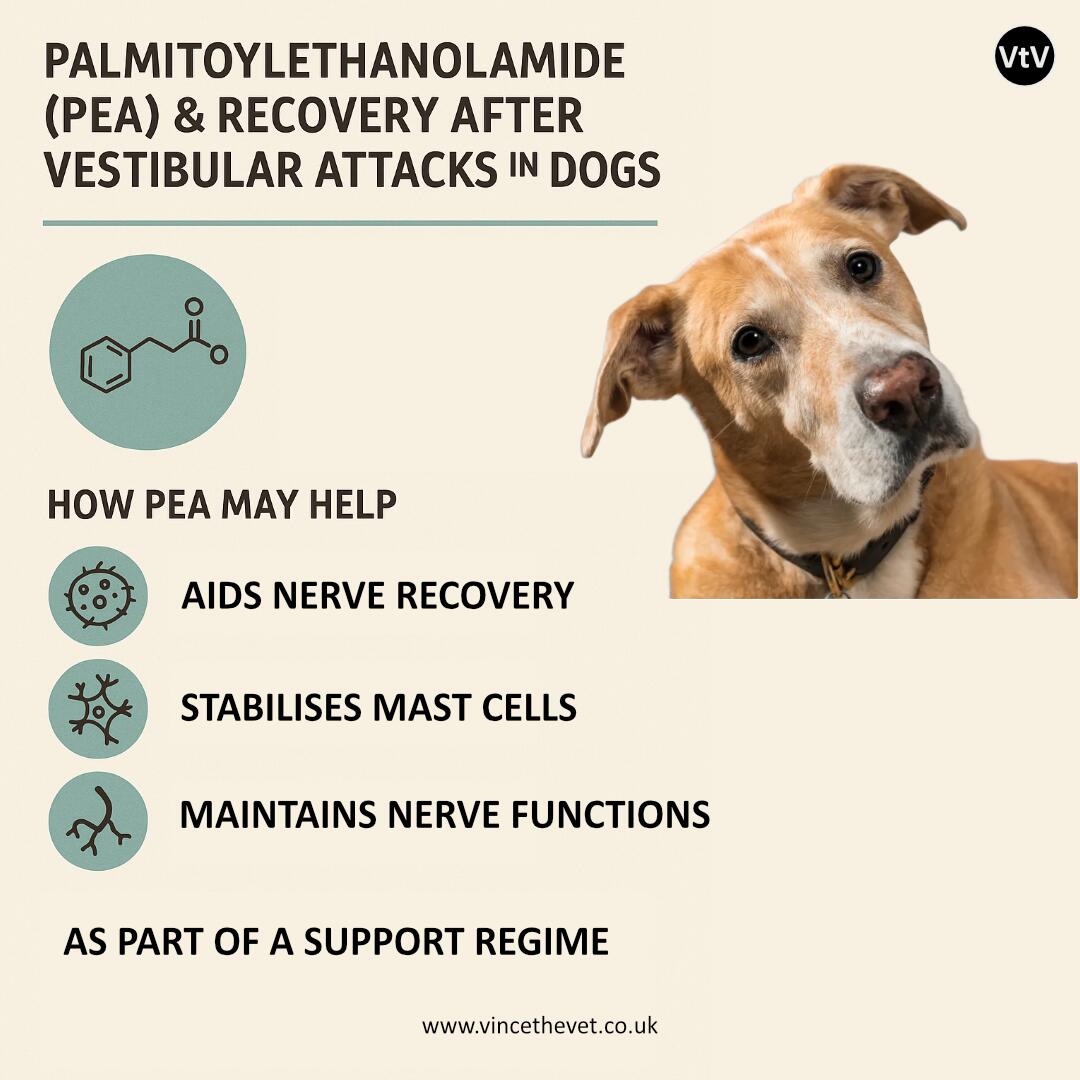
Supplementation with PEA can be an important part of convalescence following a vestibular attack to:
- aid nerve regeneration and repair
- maintain normal neurological functions
- support convalescence and a return to full health